Finding the story
Observation, research and thoughtful planning reveal the strongest stories, focus the assignment and create content that continues delivering value long after publication.
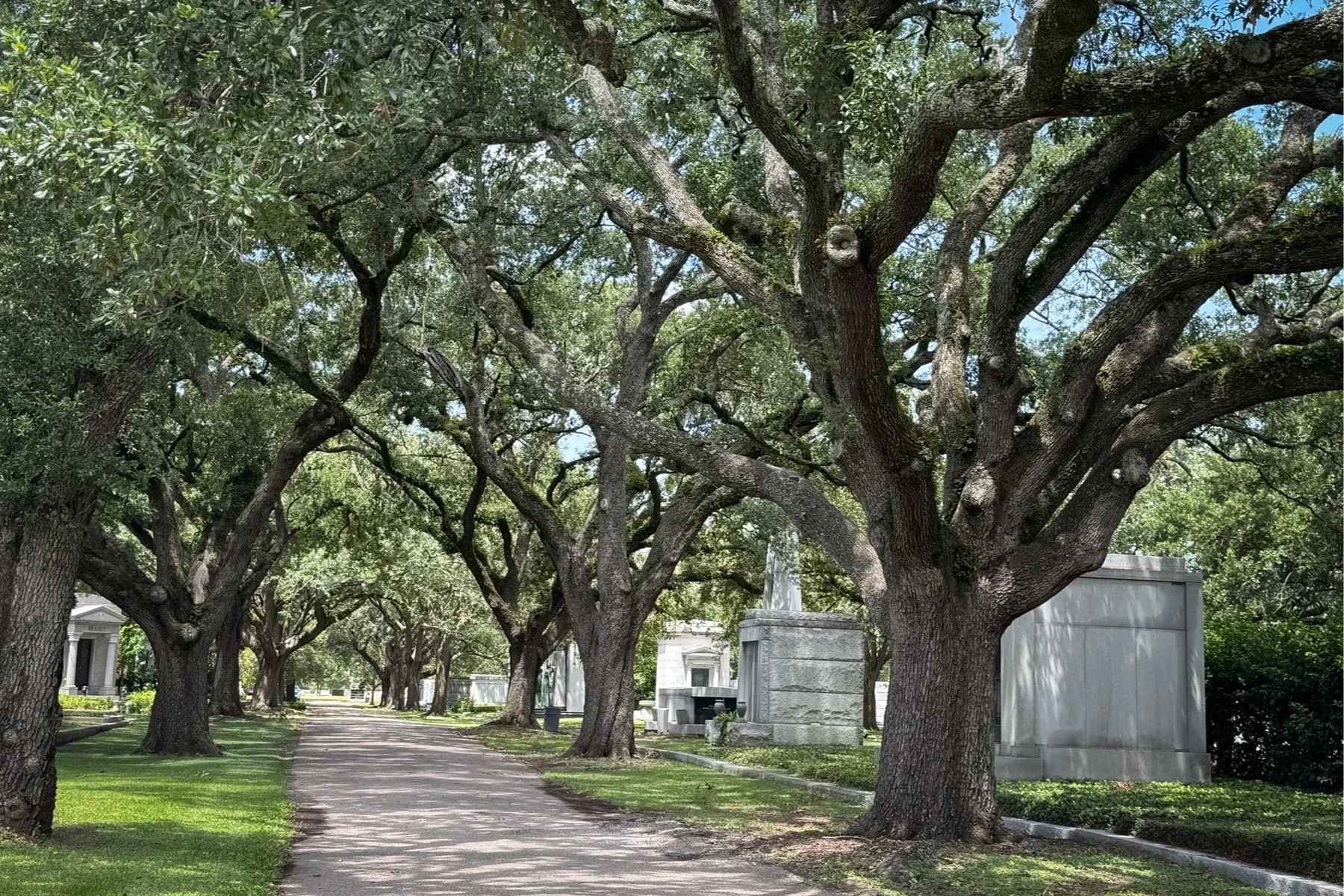
An exploratory walk through Metairie Cemetery revealed a landscape rich enough to support an entire editorial series. Photo by Timothy San Fillippo, M.A.
How an exploratory visit shaped an editorial strategy
Some places immediately suggest a story. Metairie Cemetery suggests dozens.
Built on the former grounds of the Metairie Race Course, the cemetery has grown into one of New Orleans’ most significant historic landscapes. Thousands of family tombs, elaborate mausoleums and sculptural memorials preserve more than 150 years of Louisiana history.
Governors, musicians, entrepreneurs, restaurateurs, judges and military leaders rest among generations of families who helped shape the city. Beneath centuries-old live oaks, funerary architecture, craftsmanship and landscape design transform the cemetery into an outdoor museum.
Its scale creates an unusual editorial challenge. Even three musicians closely associated with New Orleans do not occupy the same “neighborhood.”
Louis Prima rests in a family tomb in historic Section 88. Nearly half a mile away, Al Hirt is entombed on the second floor of the vast All Saints Mausoleum. Pete Fountain lies in Section 214, part of a newer section of the cemetery, roughly 900 feet from Hirt and more than a third of a mile from Prima.
Between them are thousands of monuments connected by winding roads and more than a century of changing architectural styles. Helping readers understand their stories first required understanding the place that connects them.
Before committing weeks of photography, research and writing to a new POP nakaro series, I needed to determine what kind of editorial project the cemetery could support. One feature could introduce the property. A larger series would allow readers to meet the people, explore the architecture and understand how those individual stories fit together.
The first assignment was clear: learn the landscape.
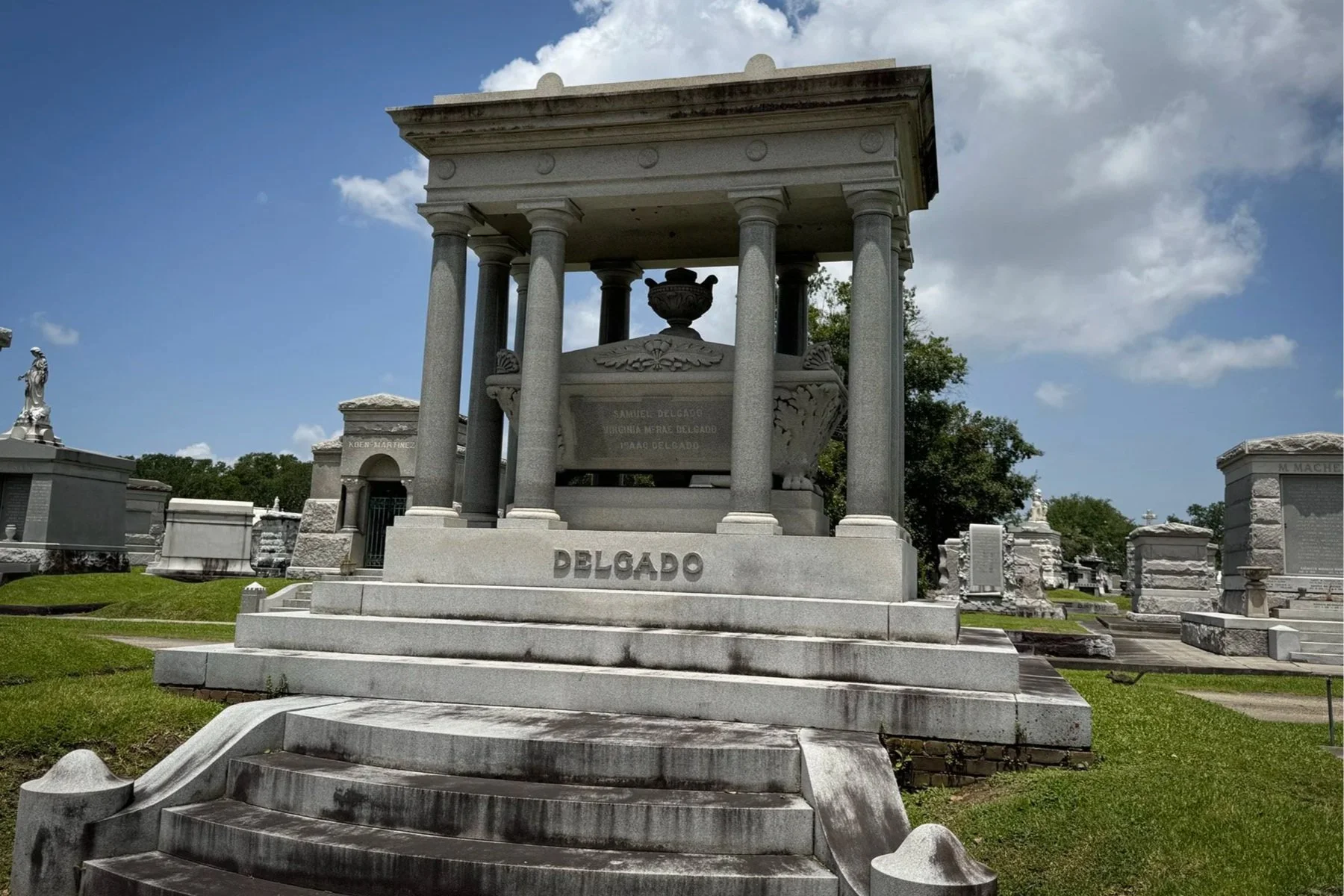
The Delgado family tomb was among the monuments that revealed stories extending far beyond the cemetery. Photo by Timothy San Fillippo, M.A.
Learning the landscape
My exploratory visit focused on orientation. I spent the morning walking the property, following its roads and observing how the character of the cemetery changed from one section to another.
The size and detail of certain family tombs immediately suggested stories extending beyond the cemetery. Familiar names such as Delgado and Copeland invited questions about the families, businesses and institutions they represented. Photographs preserved those early clues, while my notes captured connections that could guide the research.
The walk also established realistic expectations for the work ahead. Locations that appeared close on a map could be separated by winding roads, rows of tombs or even a lagoon. Changes in architecture helped define different areas of the property, while the cemetery’s scale made a methodical approach essential.
By the end of the visit, I could begin organizing the stories around the way readers would encounter and understand them.
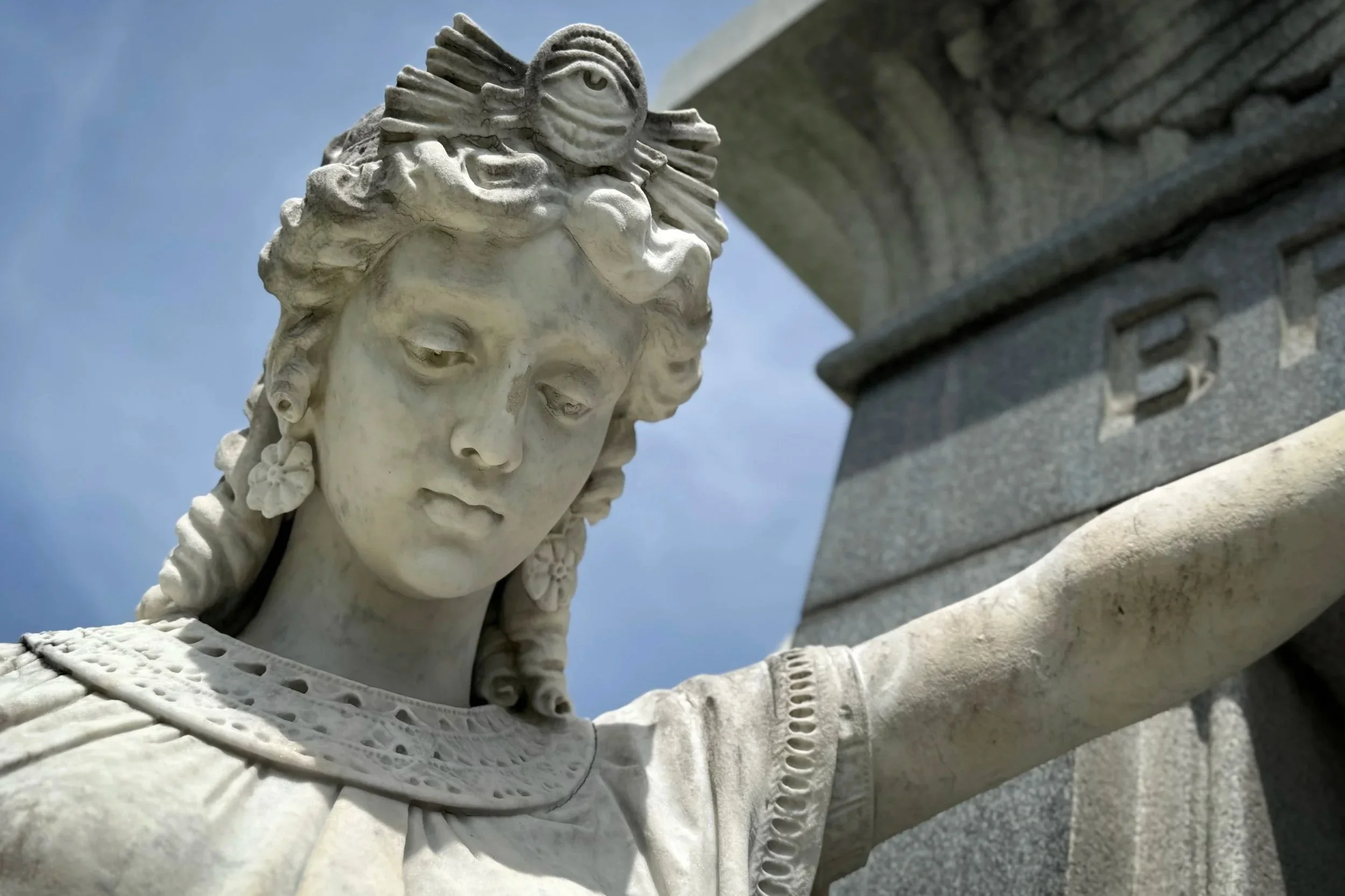
Architectural details became visual clues, helping connect individual monuments to the larger stories behind them. Photo by Timothy San Fillippo, M.A.
Following the threads
Back home, the photographs served as working notes. Cemetery guides, historical publications, biographies, archival sources and maps connected names and monuments to stories extending far beyond the cemetery gates.
A family tomb could lead to a restaurant empire. A star of the silent screen could rest beside her industrialist husband, whose former home remains a St. Charles Avenue landmark. Other names opened stories of musical legacies, political careers and institutions that shaped New Orleans for generations.
As those connections developed, the editorial structure became clear. The project would begin with an introduction to Metairie Cemetery, followed by three companion features built around the strongest stories uncovered through the research. Each would offer readers a different path into the cemetery’s history while remaining part of a larger, connected series.
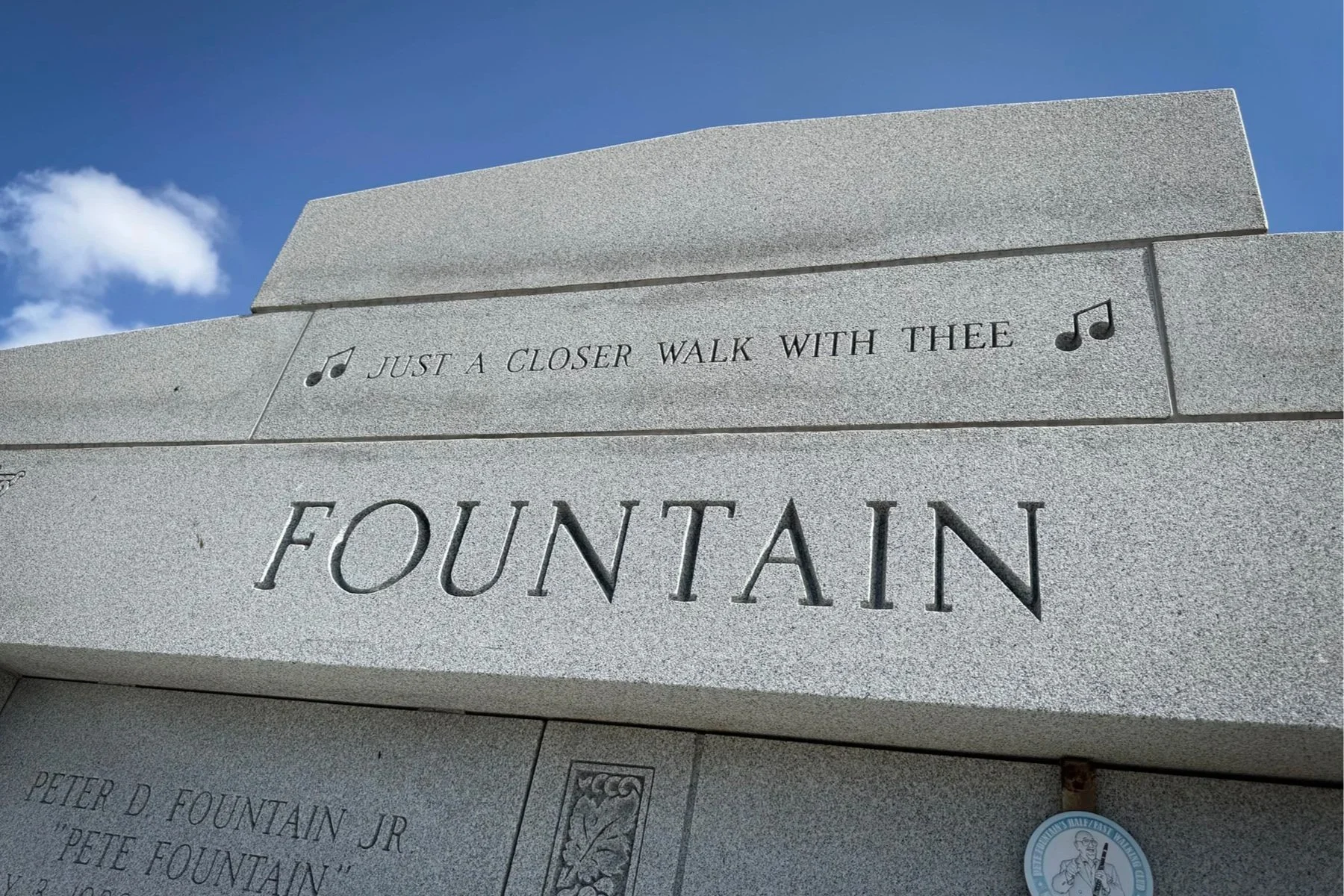
Pete Fountain’s family tomb was among the 14 subjects located and photographed during the planned field assignment. Photo by Timothy San Fillippo, M.A.
Planning the next assignment
Research established the framework. The next step was translating it into an efficient field assignment.
For each feature, I identified five primary subjects and two alternates in case a tomb could not be located or photographed successfully. Each received a GPS pin, and the stops were arranged into a logical walking route through the cemetery.
Most pins brought me directly to the intended monument. One location took longer to find because the tomb was nestled within dense rows separated by narrow strips of lawn. The pin placed me in the right area, but finding the correct family name required moving carefully through the rows.
I returned with all seven subjects for each feature. That gave the research greater depth and will introduce POP nakaro readers to more of the people whose stories remain preserved throughout the cemetery.
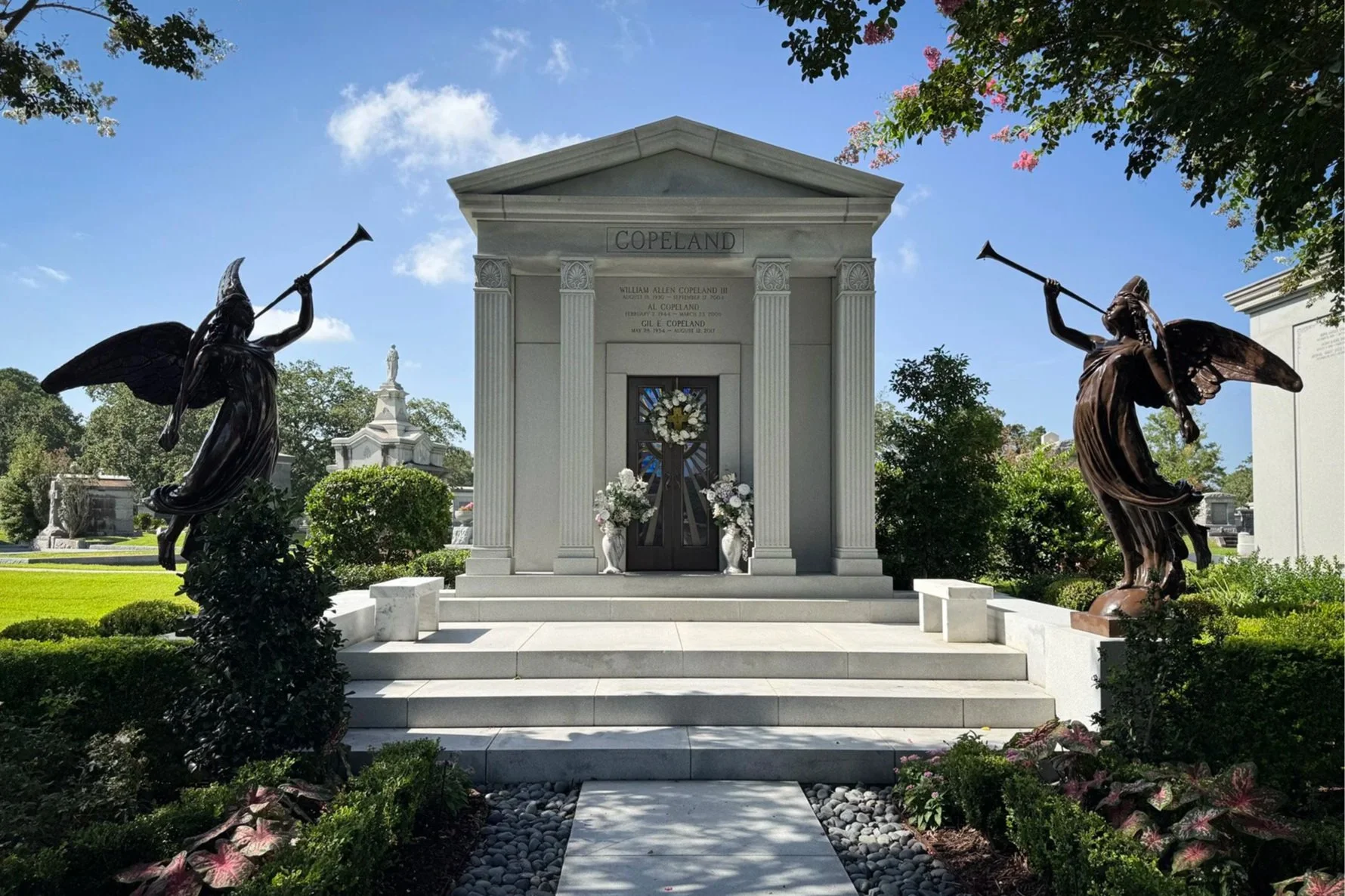
The bronze angels flanking Al Copeland’s family tomb made it one of the field assignment’s most distinctive visual subjects. Photo by Timothy San Fillippo, M.A.
Building evidence through the work
Readers will experience the finished project as a series of POP nakaro articles supported by original photography and historical research. Together, the stories will offer several ways to explore the cemetery and the people whose influence reaches far beyond it.
For TSF Strategies, the project also demonstrates how observation becomes strategy. The first visit established context. Research revealed connections. Planning translated those findings into a focused assignment. The fieldwork produced an editorial series and a library of original assets that can continue creating value after publication.
The same process guides my client work. I begin by understanding the environment, listening carefully and identifying the strongest opportunities. Those insights shape the strategy, helping each deliverable serve a clear purpose.
POP nakaro gives me a place to practice that discipline with every assignment. Each story strengthens my editorial judgment, expands my body of work and demonstrates the strategic thinking behind TSF Strategies.
Project outcomes
Two field visits
More than twenty featured locations documented
Four evergreen POP nakaro articles
Dozens of publication-quality photographs
Historical research archive
Months of social media content
A documented editorial framework for future assignments