Recruiting the first class
A coordinated recruitment strategy gave a developing Family Medicine Residency the identity, messaging and outreach platform needed to attract its inaugural physicians.
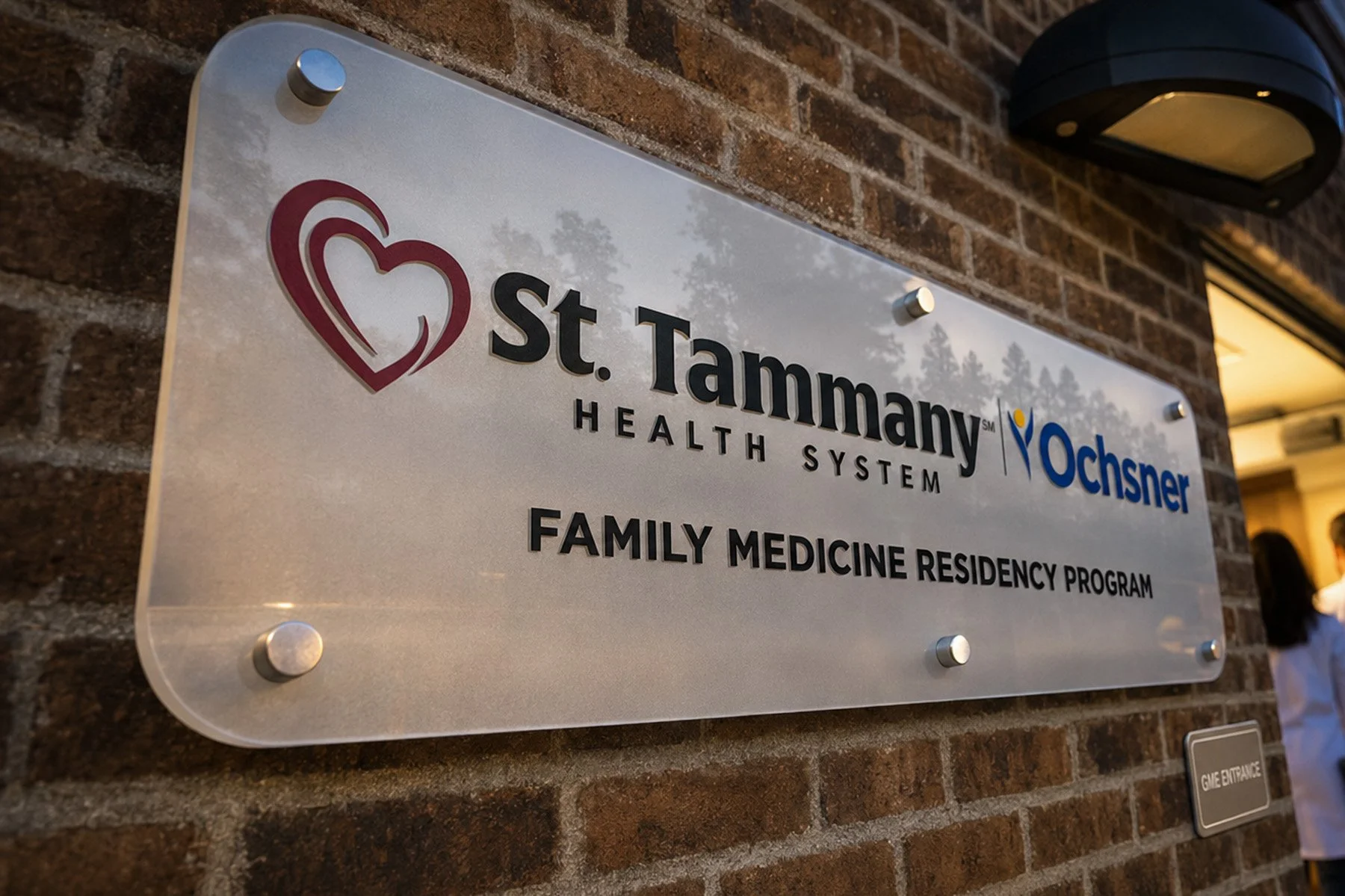
The St. Tammany Health System and Ochsner Family Medicine Residency Program brought together community-based training and academic resources to prepare a new generation of primary care physicians.
Building the recruitment foundation
Launching a residency program requires more than developing a curriculum and receiving accreditation. Prospective residents must be able to understand the clinical experience, meet the physicians who will train them and imagine building a life in the community surrounding the program.
As St. Tammany Health System and Ochsner Health prepared to establish the Northshore’s first Family Medicine Residency Program, I worked closely with program director Dr. Lisa Casey to build the communications and outreach supporting its inaugural class.
The program was being developed as a long-term response to the shortage of primary care physicians. Its mission was to train well-rounded family medicine physicians while expanding access to care in St. Tammany Parish. Our immediate assignment was to bring that vision to prospective residents before the clinic opened or the first class arrived.
The work began by defining the program’s most compelling advantages: an unopposed community-hospital experience, the academic resources of Ochsner Health, experienced faculty, a purpose-built clinic and the opportunity to help establish a new program.
Those advantages provided the foundation for the web portal, recruitment videos, print collateral, conference materials and continuing outreach.
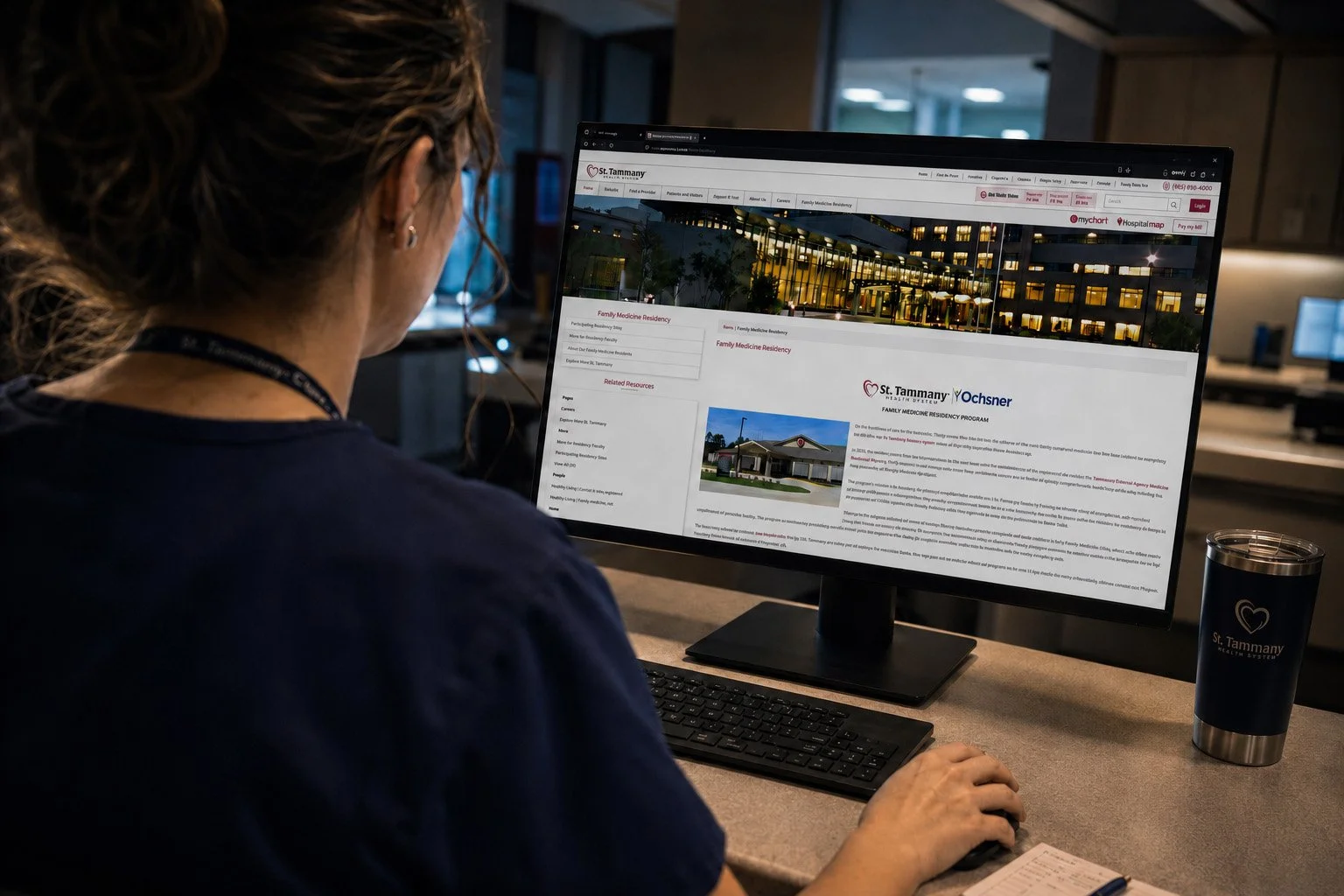
Developing the Family Medicine Residency required coordinating program leadership, recruitment strategy and communications well before the first class of physicians arrived.
Creating a complete digital destination
The Family Medicine Residency web portal served as the center of the recruitment effort.
I worked with Dr. Casey to organize the information candidates would need at each stage of their decision. The main page introduced the program’s mission and structure, while subordinate pages presented its participating clinical sites, faculty, curriculum and the quality of life available in West St. Tammany.
Recruitment videos allowed program leaders, physicians and faculty members to speak directly to prospective residents. Their participation gave candidates a clearer sense of the people behind the program, the teaching environment being developed and the health system’s commitment to graduate medical education.
The portal also connected clinical opportunity with place. Residency recruitment extends beyond rotations and benefits. Candidates are evaluating where they will live and work for three formative years. Information about Covington, the Northshore and the program’s proximity to New Orleans helped present that larger experience.
The original framework has continued to grow with the program. Today, the Family Medicine Residency portal includes detailed curriculum and benefit information along with dedicated pages for participating sites, faculty and residents. It provides prospective applicants with a coherent path from first introduction through a deeper evaluation of the program.
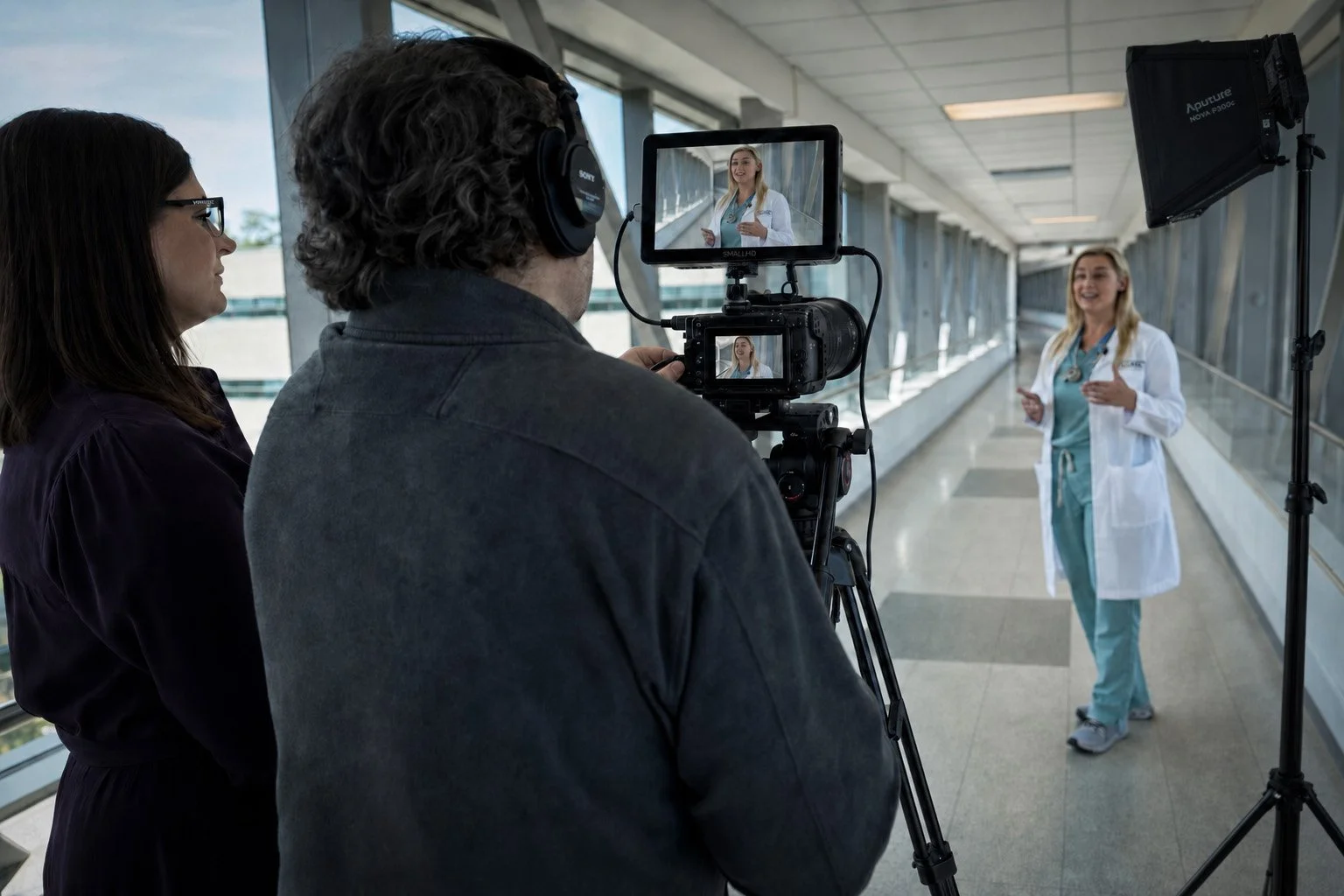
Video introduced prospective residents to the developing Family Medicine Residency, extending the program’s recruitment story across its website, social media and outreach efforts.
Bringing the program to prospective residents
The digital experience was supported by a complete set of print and outreach materials.
I developed recruitment postcards, program handouts, display graphics, a retractable banner and supporting collateral for conferences and direct outreach. The materials used the same messaging and visual hierarchy as the web portal, allowing candidates to move between a personal conversation, a printed overview and the online program without encountering a different story at each step.
The postcards provided a concise introduction to the program and directed candidates to the web portal for additional information. Longer materials explained the curriculum, clinical environment and advantages of training at St. Tammany. Conference displays created a recognizable destination where Dr. Casey and other representatives could speak directly with prospective residents.
That system supported outreach while the residency itself was still taking shape. Early conference appearances allowed the program to begin developing awareness, answering questions and building relationships within the family medicine education community.
Photography extended the value of each appearance. Rather than allowing recruitment events to exist only in the room, I documented the people, materials and conversations so they could support news, social media and future outreach.
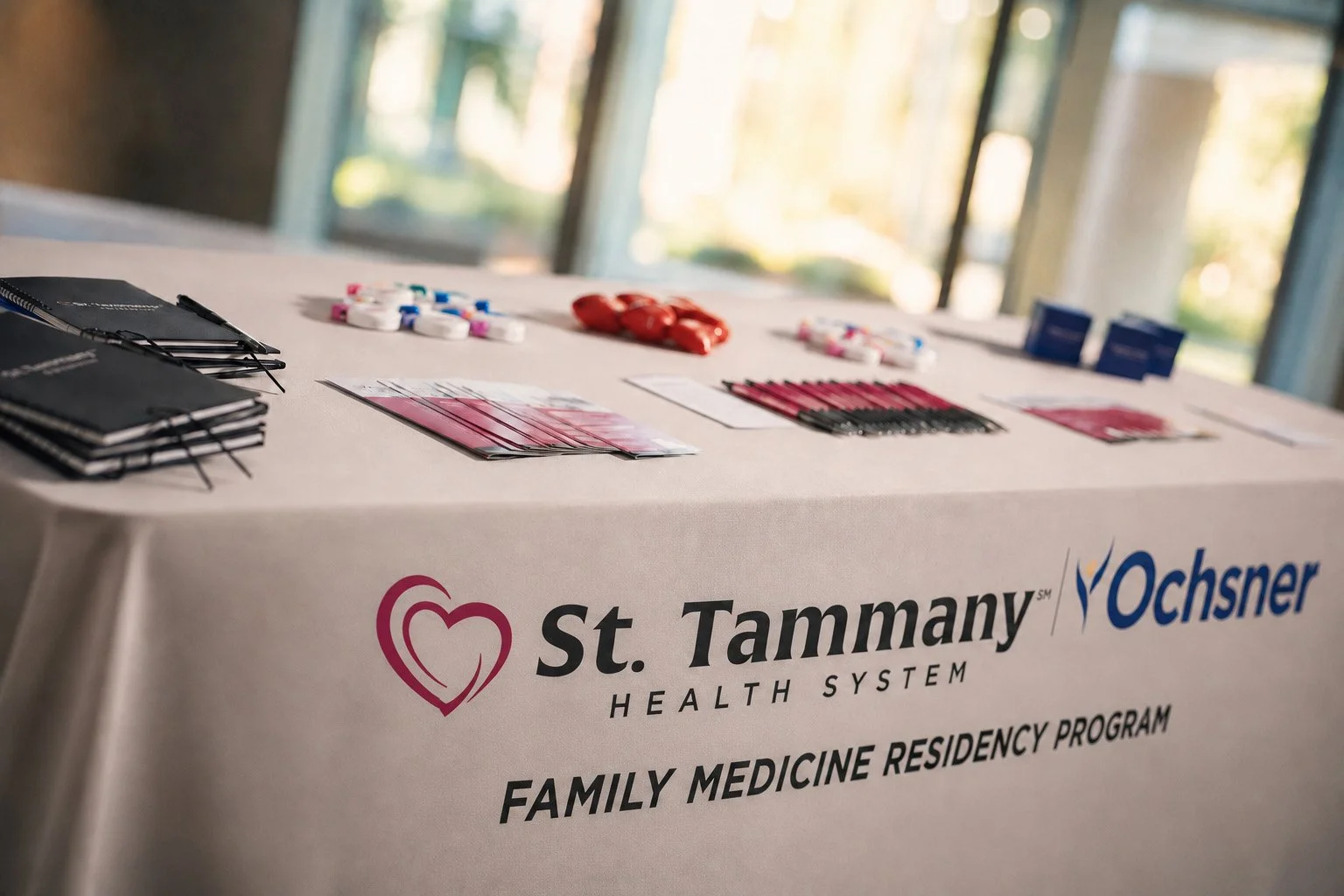
Recruitment events gave prospective residents an opportunity to meet program leaders and learn how the new Family Medicine Residency would combine community-based training with the resources of St. Tammany Health System and Ochsner Health.
Project outcomes
The communications program created a coordinated recruitment system supporting the residency from early outreach through the arrival of its first class.
Deliverables
Family Medicine Residency web portal and supporting page structure
Program positioning and recruitment messaging
Recruitment videos featuring program leaders, faculty and key stakeholders
Recruitment postcards, program handouts and print collateral
Conference display materials and retractable banner
Environmental design for the purpose-built Family Medicine clinic
Recruitment and milestone photography
Written news and feature content
Social media content supporting outreach and program awareness
Ongoing documentation of faculty, residents, facilities and program development
Outcomes
The program received accreditation in 2023.
The inaugural class of six residents began training on July 1, 2024.
The program has expanded across three resident classes and is structured to support 24 residents.
At full capacity, the residency is designed to graduate eight family medicine physicians annually.
The program established a dedicated Family Medicine continuity inpatient service.
Its curriculum has expanded to include point-of-care ultrasound with a one-to-one resident-to-device ratio.
It became the only residency program in Louisiana to incorporate lifestyle medicine throughout all years of training.
Community engagement now includes patient advisory participation, Healthier Northshore initiatives, community health assessment and direct service projects.
The clearest outcome is the program itself. What began as a recruitment story built around architectural renderings, interviews and a proposed curriculum has become an established learning environment with residents, faculty, patients and an expanding record of service.
The communications did more than announce its arrival. They gave the program a way to present itself consistently while it was still being built, recruit its first physicians and establish a platform capable of growing with every class that followed.